Welcome to our Blog!

We hope you enjoy our first attempts at blogging! This is to prevent you from receiving long boring messages that arrive on your screen when you're not ready to sit back, relax and read about our life. This way, you can come into our blog on your time, when you want and check up on us.

We hope you like our stories! See you soon.
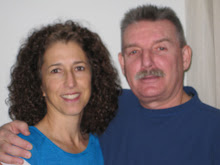
Gail and Rick

Wednesday, August 4, 2010

Bula From Fiji

After one week of go, go, go in Port Douglas; we were off for one week of rest and relaxation in Fiji. As you have probably surmised from our earlier blogs, Bula is Fijian for “Welcome” or “Hello”. When one thinks of Fiji, we trust that one will likely think of visions of blue cloudless skies, white sandy beaches, swaying coconut trees, and tropical South Sea Islands. As you feel the warm ocean breeze on your skin, your ears will tune in to melodies of Polynesian music resonating with ukuleles, guitars, mandolins and Lali drums, which are hollowed-out trunks of trees of variable sizes that are played with hands or sticks. If this imagine conjures up dreams of romance in your mind, you are correct as Fiji truly is a tropical paradise. Unfortunately, once one leaves the tourist resorts, the imagines of paradise quickly wanes. While Fijians may live in a paradise setting, the same cannot be said for their lifestyle. Fijians live in a third world country; that has many similar comparisons with Mexico. Let us explain before we tell you about our one week of seventh heaven at the resort.

Fiji – General Observations

In the last twenty-five years Fiji, with a population of fewer than one million people, has been through four political coups, with the last government being overthrown by the military in 2006. The coups are largely a result of tensions between Native Fijians and Indo-Fijians who originally emigrated from India. On one end of the scale, ninety percent of the land base is predominantly owned by native Fijian clans with no provision in place for land ownership by Indo-Fijians. On the other end of the scale, Indo-Fijians produce over 90% of the sugar cane crop, a major economic export for the country. The Indo-Fijian population has grown rapidly from the original labour force brought from India in the late 1800’s and early 1900’s to work in the sugarcane fields. Today they form the core of the country’s business class. The Indo-Fijians feel that the lease agreements do not provide adequate security to properly run their sugar cane businesses; with the result being that they have had a number of large boycotts within the cane industry, thus crippling the economy. Indo-Fijians continue to dominate the professions and commerce, while native Fijians dominate government and the military. Discontent between the two factions as well as high unemployment has no doubt been the catalysts behind the coups.

In addition to sugar export, tourism is the other half of Fiji’s economic base. Fiji is comprised of over 300 islands, some inhabited; many not. Many of these islands have been developed solely for tourism. The recent coups have severely impacted the tourism industry as many Australians, who are the main source of Fiji’s tourist revenue, are still reluctant to travel to Fiji because of the unstable political climate. Consequently, Fiji is hurting economically and the country is trying hard to convince tourists to visit their tropical islands. While in Fiji we spent a day visiting Suva, the capital city of Fiji. We were quite surprised to see only a handful of other tourists in a city with a population of approximately 200,000. The absence of tourists leads us to conclude two things: tourists were not willing to leave their resort compounds for whatever reason and/or the number of tourists visiting Fiji is still low.

Fiji’s dollar is quite devalued. Sixty-six cents Australian will buy you one Fijian dollar. You would think that as a result, goods would be inexpensive. This was not our experience as we found day to day living needs to be equivalent in price or dearer than the same product purchased in Australia. We wondered how the average Fijian managed as the standard resort jobs paid a meagre $3.50 per hour. Like Mexico, resort jobs are highly sort after by the public because they are considered to be well paying jobs. While travelling through the country side, house yards as well as brief glimpses inside homes left us with the impression that living conditions were spartan.

A typical home. Do you think the bricks on the roof are sufficient to hold the roof in place in the event of strong winds?

Services on the other hand were low-cost. A two hour local bus ride into Suva cost us approximately $8.00 Fijian. One of the experiences that we witnessed on the bus sadden us deeply and clearly reminded us that we were in a third world country. As we stopped at a local village, hawkers were outside the bus windows selling plates of food and beverages to the passengers. After many of the passengers bought their food and drink, we commenced on our journey. As the passengers finished their meal, they simply opened the bus windows throwing the styrofoam plates, plastic utensils, saran wrap, paper napkins and beverage bottles out the window. As you can imagine, the roadsides were littered with garbage and empty bottles. In addition to seeing the roadside rubbish, it was not uncommon to observe wild pigs, cows and horses roaming free alongside the road ways; oblivious to the passing vehicles. Does this sound like Mexico to you? We cannot understand how we did not see any animal-vehicle collisions.

Hawker selling food and drink to passengers on the local bus.

Also like Mexico, the resorts are a large employment sector for Fijians. Employees typically lived in villages located within one hour travel distance; with many of them having been employed by the same resort for their entire work career. They told us that they typically work eight hours per day, six days per week, with one week annual holiday time. When it came to annual leave, their tenure with the company had no special significance. Whether they had been employed for one year or twenty, they still were only eligible for one week of holidays. Even under these work conditions, whether it is at the resorts or in a town/city work environment, the Fijians proved to be happy people; generally with a smile on their face (such perfect teeth!) and a pleasant disposition.

Many Fijians we talked to had family either in Canada or Australia. It was evident that the coups had resulted in an emigration of Fijians, particularly Indo-Fijians in search of better economic opportunities. Some of the Fijians told us that the only way they could leave the country was to join the military, marry a foreigner, be good at athletics, or be fortunate enough to be sponsored by a relative already living aboard. One unabashed young handsome worker within our resort openly told us that he was looking for an Australian woman who would fall in love with him so that he could leave the country. However, another worker boasted that he did not need to leave the country since the variability in origin of tourists coming to the resort resulted in the world coming to his doorstep! Most admitted that their life had improved considerably since the last coup. We could only imagine what life must have been like before.


Warwick Resort

We stayed at the Warwick Resort, which is located on the coral coast half way between the cities of Nadi and Suva on the main island of Vitu Levu. Along the coral coast it seemed like each cove or bay housed a resort. Each resort appeared to be securely stowed away and distant from local towns and villages. Our nearest town was Sigatoka, which was approximately a ½ hour ride west of the resort. It seemed apparent that the resorts are located so that they remain isolated from local population centers. Consequently, the resorts have captive markets and the prices inside the resorts take full advantage of the situation. Cocktails cost $15.00 Fijian or when converted, $10.00 Australian. Dinners at the resort restaurants, consisting of an appetizer and main course as well as a single drink, typically were in the range of $150.00 Fijian for two people. Fortunately for us, we had made earlier arrangements to go “All Inclusive”. We think that the All Inclusive concept may still be relatively new with Australians as there were very few tourists at the resort who took advantage of this option. Given that the resort clientele are held captive and resort amenities and conveniences are priced accordingly, we thought that there would have been more people taking advantage of the “All Inclusive” option.

Does All Inclusive sound like Mexico again? We have had the good fortune to be able to travel to Mexico on the “All Inclusive” package as well as “The Pay As You Go” option. In our opinion, either option you choose has its advantages and disadvantages. If you go All Inclusive, you don’t have to worry about any additional charges as all your costs are covered up front. The disadvantage to the All Inclusive is that you feel you should stay at the resort and not venture far because you have already paid for your meals, drinks and resort services such as the recreational facilities. Hence, you don’t venture far from the resort and don’t have the opportunity to visit local restaurants. Conversely, if you pay as you go, you experience the local environment more, may be more prone to “Montezuma’s Revenge” and should be prepared to pay “tourist” prices at local eateries that are situated near the resorts. Of course, the further you stray from the resorts looking for an eatery, the more reduced the prices become.

Since it was our intent, while in Fiji, to just sit back and relax at the resort, we purposely took the All Inclusive package. After having arrived at the Warwick, we were very happy with our choice as we didn’t even have the option of eating at any local eateries without taking ½ hour bus ride into town. Other than our day trips to Suva and Sigatoka, our time at the resort was spent snorkelling in the bay, lazing in the sun, playing mini golf, going to the gym, taking in the nightly entertainment such as fire walking and enjoying the fine dinning in the resort’s three 5 star restaurants. Talk about a week of R&R!

Fire Walking Show. Sorry for the quality of the photo, but it was total darkness after all!


Seafood Restaurant at the resort – One of the three fine dining establishments


Sun starting to set over the bay. We certainly enjoyed the view during our daily happy hour which started around 4:00 PM


A relaxing moment on our balcony


More relaxing moments with the coral reef breaking the surf about 500 meters off shore

Sunday, August 1, 2010

Hello from the Great Barrier Reef - Port Douglas

We had two weeks off school and we filled it with frivolity and travel time! Since it was the middle of winter and it was surprisingly cold in Kadina; we decided to take a warm winter vacation with one week in Port Douglas, Queensland (near the north eastern tip of Australia) and the other week in Fiji. However, before we tell you about our travels, we need to explain why we have found the winter season to be uncomfortably chilly. This may sound strange as most of you may not associate “cold” with Australia. We certainly didn’t!

In Kadina, the average annual winter temperature is around 15oC, with early morning temperatures in the 3 - 5 oC range. Sometimes the thermometer will dip even lower so that Jack Frost is on the lawn; but certainly nothing that would be considered harsh by Canadian standards. So on average, the winter is a beautiful time of the year and most enjoyable outside. Where the cold issue arises is inside the house.

We are living in one of the many original older homes in the town. The house was built around the turn of the century with an extension added on around 1930 – 1940. These homes are something with which we have no familiarity. For example, unlike Canadian homes, there is no central heating or air conditioning system to maintain a constant temperature throughout the house. The walls of the homes are typically 12-18 inches in thickness, are constructed of stone/rock, have slate or steel roofs with each room typically having 12 – 14 foot ceiling heights and a fireplace. Verandas, the entire length of the house are a standard feature and the houses are, where possible, aligned in a north-south exposure. They have been designed and constructed so as to minimize the unbearable heat in the summer. Given the thickness of the walls, it will take the house three or four days to absorb the full effect of +40oC temperatures. If the heat wave lasts longer than that, the heat is absorbed into the rock walls, thus turning the house into an inferno. Conversely in winter, when the temperatures drop outside into single digits (oC), the house cools down considerably. The fireplaces must be in constant daily use to warm the home as the radiant temperature from the winter sun is not intense enough for the stone building to absorb sufficient heat to provide a comfortable living environment. As you may have concluded, the fireplace is the key feature to ensure that these houses are comfortably warm in winter. Unfortunately because of the age of the homes, many of the original stone fireplaces are in need of repair or no longer operational as they are extremely inefficient. To mitigate, the homes are heated by wood burning Franklin Fireplaces or reverse cycle heater-air conditioning units. Regrettably, the reverse cycle systems and Franklin Fireplaces are not in every room, hence you experience extreme cold during the winter season in those rooms without a heat source. The newer homes have been designed to have the reverse cycle air and heat systems distributed to all rooms of the house. Consequently, these homes have a much more comfortable and pleasant living environment in both winter and summer seasons.

We have placed a thermometer in our kitchen and have yet to see the mercury rise above 11oC. In the morning, it is typically around 8 – 9oC. In our bedroom, comfort is provided at night by use of a portable electric heating element accompanied by a single bed (on a king-sized bed) electric blanket. When we complain to our Aussie friends about how cold it is in the house, they simply laugh; remind us that we are from the land of ice and snow, suck it up, and just “rug up” by putting on another sweater or “jumper” as it is referred to in Australia. They cannot understand how we can live in an environment in Canada where you constantly have to “rug up” by putting on parkas to go outside for a few brief minutes. As one Aussie stated, how can you Canadians stand it when it takes 5 minutes to rug up to go from one rabbit warren to the next warren; only to strip all your outer clothes off and lounge around in tee shirts? It just goes to show that people are generally more comfortable in those conditions that they grew up in and those environments upon which they have become accustom.

When we first arrived in Australia we could not understand why many retired Australians go “north” to the tropics in Queensland and the Northern Territories to escape the winter. Now, we understand why. Unlike Canadians who go south to escape the outside cold, Australians head north to flee from the cold “inside” their homes. Given our unexpected surprise at discovering how cold the homes could be in winter, we were most anxious to arrive at our holiday get-away in Port Douglas, which is located in the Australian tropics.

Port Douglas – Where the Tropical Rainforest Meets the Great Barrier Reef

Port Douglas is located on the 16th degree latitude south, approximately 70 km north of the tropical city of Cairns. The population of Port Douglas is around 3000 people, but easily fluctuates to around 10,000 people in winter as tourists flock to the site where the tropical rainforest meets the Great Barrier Reef. Initially we had planned on a golfing holiday as the community boasts two excellent resort courses and one enjoyable local public facility. However, upon arriving at our destination, we quickly came to the realization that golfing would become a secondary activity while on our holidays. Port Douglas proved to be a nature lover’s paradise. Within easy daily access one can travel by boat to the Great Barrier Reef, or travel by vehicle to a world heritage tropical rainforest. Don’t misunderstand us, the golfing was great as we managed to get in 3 rounds, but the tour to the reef and rainforest is what we will remember most.

While in both Port Douglas and Cairns, we literally came across groves of trees that housed thousands and thousands of "Flying Foxes" which we believe are a type of Fruit Bat. The noise was deafening and the smell was "rank"


Daintree Rainforest
The world heritage listed Daintree Rainforest is located immediately north of Port Douglas. It is the epitome of ecotourism. Cruise boats will take you up the jungle setting of the Daintree River where you will view crocodiles lazing along the river’s edge and catch glimpses of tree snakes camouflaged with the hanging vines of the trees that make up the mangrove swamp. Colourful birds fly overhead or chirp relentlessly from their tree top perches.

The day spent in the Rainforest was truly unforgettable. We rode in a 4X4 vehicle to access remote areas within the rainforest. As we gripped the door handles of our 4X4, we forded a number of raging streams or rivers throughout our journey. Around each bend in the road we were rewarded by either stunning ocean vistas or dense rainforest wilderness. We hiked along rainforest trails, unable to comprehend the botanical biodiversity that was saturating our craniums. Our guide would simply chuckle at us as we struggled to soak it all in. He would then point out another interesting tidbit such as the large Buttress Fig Trees which were once used by Aboriginals to make shields and boomerangs. We visited Bloomfield Falls and marvelled at the volume of water cascading over rock faces and steep precipices on its way to the ocean. Part of our day tour took us to beautiful un-inhabited beaches that awaken all your senses. Your lungs and eyes tried to breathe in and capture the untouched, unspoiled natural beauty. We spent what seemed like eons of time just watching soldier crabs create a landscape painting as they burrowed in the sand and scurried along the beach.

Daintree River Cruise


Mangroves growing along the Daintree River


Bloomsfield Falls – After coming from arid Kadina, it seemed strange to see “Water, water everywhere”


Buttress Fig – Aboriginals use to make shields and boomerangs out of the flat (buttress) portion of the above ground root system.


Beautiful Pristine Beaches


Soldier Crabs – Nature's Artists on a micro scale and


……on a macro scale.


Great Barrier Reef
At Port Douglas, the Great Barrier Reef is located approximately 45 minutes by boat from shore. Being at the reef will meet or exceed your greatest expectation! What more can we say about the world’s largest reef system that stretches over 2600 km in length? Seeing the world’s single biggest structure made by living organisms is more stunning than you can ever imagine even if you have seen it on a number of television documentaries or read about it in books. On our tour, we stopped at three locations along the reef. We were able to experience the thrill of snorkelling amongst sharks (the non threatening kind but don’t tell!), giant clams the size of ½ a bathtub, moray eels and a plethora of tropical fish. Colours! Incredible! Amazing! Awesome! Fantastic! Humbling! Spiritual! On our way back to shore from the reef, we were also entertained with a little whale watching. No wonder approximately 2 million tourists annual flock to see this natural wonder of the world. It is easy to understand how the reef can generate over 1 billion dollars a year in tourism.

Our only regret about the trip was the fact that we did not have an underwater camera with us so that we could capture the breath-taking beauty. Then again, we are not convinced that a camera would do it justice.

Gail gearing up for snorkling on the reef.


At the reef – unfortunately there is nothing at the reef which provides one with scale, or relief. Hence the rather “bland” picture of the reef. However, we felt it imperative that we show you the reef in our blog as it was on our “must see” list prior to coming to Australia. Remember the beauty lies below the surface of the water!

Kuranda
One day we decided to take a 7.5 km tram line ride over the rainforest to the small town of Kuranda. It is a picturesque mountain retreat high in the hinterlands just 25 km northwest of Cairns. The town is characterized by up-market restaurants, cafes, bars and artisans. Yes, it is a “Tourist Trap”, but it is well worth a visit. Clearly, the residents live there for the lifestyle since the weather is not as humid as the coastal area. After a day of visiting the numerous shops and enjoying a scrumptious lunch, we traveled back to Cairns via Kuranda’s historic railway. Originally constructed in the 1880’s, the 2 hour journey winds its way through dense rainforest, across steep ravines and pass scenic waterfalls.

Sky Tram over the rainforest on the way to Karunda.


Canopy Walk in the Karunda Rainforest.


Karunda Arts and Crafts Shops


Karunda Historic Train – Pictures Anyone? Seems like a number of passengers had the same idea.

After our week of go, go, go at Port Douglas, we were looking forward to a week of rest and relaxation on the beach in Fiji. Look for our blog on Fiji in the next week or two.
We put in a couple of golf photos below just to show you that we did go golfing.

Beautiful Resort Courses


Sugar Cane Fields in the background. Forget about finding your ball if you have an errant shot!


Rainforest Walk between Holes


Gail’s LPGA Pose

Sunday, July 25, 2010

Food for Thought

We are just back from our holidays to the Great Barrier Reef and Fiji. We will be writing a blog entry about our trip in the near future. In the meantime, Gail has been asked to prepare an article for the Alberta Teacher’s Association Magazine on the benefits of going on a Teacher Exchange. It is our understanding that this article may also appear sometime in September in the Edmonton Journal when the newspaper runs a supplemental on “Education”. We are letting you on the “inside scoop” as a copy of the article is provided below:

Benefits of Going on a Teacher Exchange

Are you considering contacting Alberta Learning to apply for a teacher exchange position overseas? If you do go, be advised that you will experience one of four “ATE’s” while either on exchange or immediately upon returning to Canada. You may (i) “RelocATE” because your one year of living aboard has encouraged you to go live your dream; (ii) “RenovATE” because your accommodation while on exchange has provided you with inspiration to remodel your home; (iii) “SeparATE” as you recognize that the one year exchange program was an ill-fated attempt at saving your marriage or relationship; and finally (iv) “ProcreATE” because that is what many young couples tend to do when they are happy with their lot in life.

I am a Foods Teacher currently on exchange with my husband in South Australia. We feel that there is a fifth “ATE” that former exchangees have neglected to identify for us. This is the experience of trying different, wonderfully delicious, and unusual foods. While on exchange, we have certainly ate and ate and ate!

One of the things that we have learned on our exchange is that, on average, our South Australian friends are much more knowledgeable about wines and foods than our Canadian friends. Throughout the year, South Australians have the pleasure of being able to harvest a variety of locally grown fruits and nuts (even in their back yards!) such as almonds, olives, passion fruit, pomegranates, quandong, apples, oranges, lemons and limes. South Australians also live either in or adjacent to a world class wine area. A common past time is to go for a drive on the weekend to sample local wines at the numerous cellar doors or partake in an eclectic meal at a local eatery. Hence, through osmosis, they have become very educated about their wines and foods. Based on our social calendar, we have come to realize that South Australians also like to drink a lot of wine. It seems like every time we visit someone, a bottle of vino, and in particular a bottle of South Australian wine is being opened, and snacks of cheese, crackers, olives or other nibbles appear. Given this prelude and generalization with respect to life in South Australia, we suggest that you forget that an exchange is all about travel and testing your vast array of professional skills. Rather concentrate on the foods that you will discover as they alight on your palate and tantalize your taste buds.

For starters, how about an appetizer of dukkah - balsamic glaze and Turkish loaf of bread accompanied with a bottle of Barossa Valley shiraz? Bread fresh out of the oven is dipped into a glaze and then coated with dukkah; which is a wonderful blend of nuts and spices. What a beautiful flavour! Dukkah is typically made of crushed toasted almonds and pistachios mixed with a variety of spices and sesame seed. This is the recipe that we enjoy and was designed by googling “dukkah” and tweaking; but don’t hesitate to experiment with your own concoction of herbs and spices.

Dukkah
1 cup crushed almonds
1/2 cup crushed pistachios
1 Tablespoon whole cumin seed
½ teaspoon thyme
1/2 cup sesame seeds (don’t crush these)
¼ teaspoon sea salt
1 Tablespoon coriander seeds
½ teaspoon crushed red pepper flakes
1 Tablespoon black pepper

Using either a rolling pin or mortar and pestle crush the nuts to a finely ground powder but leave a few chunkier pieces. Mix the herbs and spices with the ground nuts. Place the concoction on a pie plate or similar flat dish to toast for about 20 minutes at 200 F. Of course, this appetizer is not complete without the balsamic glaze. Take 1 cup castor sugar, 1 cup balsamic vinegar with 2 cups of chicken stock, place over high heat and reduce until the glaze is thick and syrupy. And for the “piece de resistance”, simply uncork a fine bottle of red and let the visiting and conversation with friends begin!

For the main course, we suggest that you serve Australian Leg of Lamb; with another bottle of the red magic elixir! When Australians hear that you’ve never eaten a leg of lamb roast they’ll either walk away wondering what’s wrong with you or invite you for Sunday lunch. Luckily for us it was the latter! Our first leg of lamb roast was a knee buckler. The meat melted in our mouth as we savored the rich dark gravy and zesty mint sauce. The lamb was accompanied with roasted potatoes and garden-fresh vegetables. Our host thought it rather amusing that we were taking pictures of her roast!

Sunday Lunch – Roast Leg of Lamb

You can be assured that one of the vegetables served with lamb roast in Australia will be pumpkin. Australians are big on pumpkin. We have had it roasted, in soups, in ravioli, in muffins, as well as cold in a sassy pumpkin - spinach salad that is topped with pine nuts in a honey – olive oil dressing! Why don’t Canadians eat pumpkin on a more regular basis, rather than just at Halloween? Aussies cringe when we tell them that pumpkin is usually served from a can and used as the primary ingredient for pumpkin pie. After our experience living in South Australia, we can state with confidence that carving the Jack o’ Lantern has robbed the pumpkin of the culinary respect it deserves.

One of our true joys of living in a small town in South Australia is the regular visits to the local butcher. When we told him about our feast of Roast Lamb; he immediately gave us, free of charge, six lamb shanks to try. Yes, you read that last sentence correctly; it was free of charge! Lamb shanks are the elbow and knee joints of the lamb. They need to be slow cooked for four to five hours to capture their full flavourful essence. My mouth is watering now as I recollect that first lamb shank meal. Lamb shanks can be cooked in a number of ways, such as braising, roasting or in casseroles. When we visited Leon, another friend, we were introduced to lamb shank soup, accompanied with another bottle of South Australia red of course! Are you sensing there is a common theme here when you get together to dine with South Australians? Although the appearance of a knee bone served in individual soup bowls can appear daunting, the initial sip of the broth will prove to be divine. The soup was dubbed “Leon’s Come What May Soup” because he really doesn’t have a recipe. The lamb shanks are allowed to simmer all day in a rich soupy broth of grated or chunks of vegetables, rice, barley or noodles or a combination of them all. What goes into the soup is dependent upon what is left over as Leon clears out his fridge. I doubt if he could replicate the soup twice because he makes it up as he goes along – hence the name! However, a bowl of it is to die for!

For dessert, don’t be surprised if you are served something light, fluffy and not stuffy! A bowl of sliced bananas bathed in banana-flavoured custard sprinkled with dark chocolate slivers on top will do the trick. Of course it must be served with a bottle of chilled Botrytis Semillon. This dessert wine is very similar in taste and flavour to our Canadian Ice Wines.

Typical Market Setting….


With plenty of unusual foods to try!

As we make our way back to Canada, we already know which “ATE” category will define our year of living and working abroad. No, it will not be “SeparATE” because the mirth and merriment we are having during this year of adventure has brought our relationship closer together. If you are curious what our year on exchange has been like, go to our blog (RickandGail.blogspot.com). We have created this site for the entertainment of our family and friends in both Canada and Australia.

While on exchange, as is to be expected, there has been a number of life changing travel and work experiences. Yes, we’ve travelled to Singapore, seen the Sydney Opera House, the Outback, the Great Barrier Reef, Uluru (or Ayer’s Rock for those of you not familiar with the name change), Fiji, Vietnam, Malaysia, Kangaroo Island, and countless weekend trips to South Australia’s Wine regions. However, I still think one of the most stunning things about going on exchange is going over or having your neighbour over for dinner and sharing culture, fabulous food and good times together. Thinking of an exchange? Get in touch with Sara this week for an application form at Sara.coumantaurakis@gov.ab.ca

Thursday, June 24, 2010

OUTBACK LIFE

FROM THE MARREE RACES TO THE BIRDSVILLE TRACK TO COOPER’S CREEK

Australia celebrates the Queen’s Birthday as a public holiday on the second Monday in June. Back in January Dawn, one of Gail’s teaching colleagues, and her husband Doug had promised to take us along on a camping trip to the Outback for the long weekend holiday in June. Dawn and Doug had advised us that June would be a good time to travel in the Outback because the winter clime would be more bearable than the searing hot summer temperatures. As well, the pesky flies would be much more tolerable to bear during the winter season.

In eager anticipation, our bags were packed and we left immediately after school, on Friday of the long weekend. Our destination that night was a Sheep Station located near Craddick which is approximately three hours driving time from Kadina. In Australia, sheep stations can range up to thousands of square kilometres in size with variable sheep stocking rates depending upon pasture conditions. Sheep stations are not like our farms….sheep stations are huge!

The Sheep Station we visited is owned and operated by Andrew and Joy, who are dear and life long friends of Doug and Dawn. After a couple of hours of “catch up time”, teasing banters, and fond reminiscences between the two couples, we bedded down in the Shearers’ Quarters. Shearers’ Quarters are temporary living facilities that each Sheep Station provides to house transient sheep shearing teams. Throughout the year, sheep shearing teams travel across Australia from station to station shearing sheep, grading, bundling and baling wool. The shearing team lives a Spartan life as they move from one sheep station to the other. An average sheep shearer will shear 200 sheep in a day making approximately $5.00 per fleece. Extremely good shearers are able to shear 300 sheep in a day. This may sound like good money; however, the work is seasonal and back-breaking. It is a special breed of person who makes a living being part of a team as shearing operations will continue throughout the summer; even when temperatures exceed 40oC.

Outside the Sheep Shearer’s Quarters. Packed and ready to go!


Spartan Conditions inside the Sheep Shearer’s Quarters


By the time we arrived at the station on Friday, the sky was dark. We had no idea what the station would look like in daylight. On a frosty (Yes, there was Frost!) low lying foggy Saturday morning we awoke to a surreal setting. Through a misty morning haze sheep “Baaed” and kangaroos bounced across the sheep paddock which was speckled with an endless expanse of saltbush and various other grazing forbs and grasses. Gail commented that we had waited six months to see kangaroos bouncing in the wild. Prior to now, we had only seen this marsupial in a stationary position as they grazed in fields. We could now check another Aussie Icon off our bucket list.

Being naïve, we asked Andrew if we were finally in the Outback. With a slight grin on his face he replied “No – the Outback starts about 15 km down the road. This is still pastoral country because outback country only applies to those areas where you can’t see the lights of your neighbour’s place anywhere on the horizon.” Given that we hadn’t seen any lights on the horizon the night before, we suspected that Andrew was having a yarn at our expense.

After checking tire and oil pressures in the 4X4 vehicles, inspecting the rigging on the accompanying tent trailers, and most importantly confirming that the proper UHF radio frequencies between vehicles was operational, the six of us were off on our adventure through the outback. We were advised that it was wise to travel the outback in two vehicles that are well equipped with provisions, lots of water, jerry cans of fuel and extra parts. After our weekend adventure, we now understand why it is important for vehicles to travel in pairs while journeying through the outback. The rocky road surface can play havoc with tires, frequently causing more than one flat. It is also not unusual to see road signs advising that the next fuelling station is more than 400 km away. Hence it is wise to have assistance when there is a vehicle breakdown….particularly in the summer. Andrew nonchalantly told us that the hottest temperature he had recorded on his thermometer gauge at his station was over 50oC.


The Signs say it all!

Our Saturday destination was a 5 hour journey to Marree. We were headed to the “Marree Horse Races” which is the annual social highlight of the year for this outback town. Established in 1883, Marree was situated at the head of the rail line. Cattle were driven down from Queensland and the Northern Territory to Marree where they were corralled and transported by rail to Adelaide. At one time, Marree was a thriving community, but after the rail line was relocated 200 km to the west in 1980, the town has subsequently dwindled down to a community of approximately 100 people.

On our drive to Marree we passed a number of sheep stations, saw sand dunes in the distance, and travelled through parched desert terrain. We picked our way along both rocky and dusty roads, and made our way through the “Dingo Fence”, another Australian Icon. The Dingo Fence stretches approximately 5500 km across the Australian outback. It was originally built in the 1880’s to keep Dingoes out of Australia’s fertile lands to the south east. Today, government employees travel along the fence making repairs where necessary so as to ensure that sheep herds to the south are protected from Australia’s top predator on the food chain. As we made our way to Marree, our eyes were constantly scanning the terrain in a full 360 degree searching pattern. At times, there was absolutely no relief of any kind on the landscape. Gail commented that the flat topography reminded her of Saskatchewan because you could watch your dog run away for three days. Dawn remarked that they referred to this part of the outback as “Utter Desolation”. Ironically, we all agreed that this utter desolation held a certain subtle beauty and we could understand how the Outback could get into one’s blood.


Dingo Proof Fence stretching across most of the Australian Outback


Utter Desloation

When we arrived at Marree, the races were well under way. The airstrip was crowded with private planes as people from all across the outback travelled by various modes for a social outing to Marree. Given the opportunity, a professional photographer would have been in his/her element photographing people at the races. There were all kinds of cowboy hats sitting on top of many weathered sun-drenched faces that had spent a life time outdoors. Some hats looked like they were just off the shelf from a fancy clothing store, while others had seen a “lot of hard miles and dust”. Many cowboys or Jackeroos as they are known in Australia were dressed in their “Saturday Night” best shirts, while other Jackeroos appeared dusty and grimy as if they had just come in off the ranch (or station in this case). We were surprised at the amount of money that was exchanging hands as people bet on their favourite race horse. We were told that for some Jackeroos, money was not much of an issue due to the fact that they had not been to town for months and it was simply time to party!

Andrew and Joy were in their element talking and getting caught up with friends and acquaintances that they had not seen for a while. One lady was particularly interesting as she talked to Andrew in such a way that she hardly moved her lips. She seemed to talk through her teeth. When we asked about her, we were told that she was Andrew’s and Joy’s neighbour. We found out later that she lived 56 km away from their place! We were subsequently told that many people living in the outback learn to talk through their teeth as a way to cope from flies getting caught in their mouth. After having spent a summer in Kadina, this is something that we understand and can relate too. Flies in South Australia are on par with Canadian mosquitoes. While golfing at our local golf course during the summer, the flies were horrendous. They were unrelenting as they constantly sought any source of moisture such as one’s mouth, nostrils, ears and eyes.

At night, the Cabaret at Marree and the party goers were in full swing. Instead of the revelry and carousing, we elected to sit around the camp fire and enjoy the winter skies. And we thought that the night skies in Kadina were incredible! Amongst a few shooting stars, the Milky Way was the main attraction. It was a blur of stars, one indistinguishable from the other. Now we know why it is called “Milky”.


And They’re Off!

End of Fly Season on the Golf Course at home. Can you imagine what the flies must be like during “Fly Season” in the outback?

On Sunday, we went for about a 150 km drive on the Birdsville Track up to Cooper’s Creek. As far as we can surmise, travelling on the Birdsville Track would be equivalent to driving a portion of the Alaska Highway. It seems that most, if not every, Australian has heard of the Track, but many have not actually travelled it. Our destination was Cooper’s Creek. Cooper’s Creek is normally a non descript dried creek bed. However, this year the creek was filling with water originating hundreds of kilometres to the northeast from unseasonably wet rains occurring in Queensland. The last time that the creek had water in it was in 1974. This phenomenon is considered by many Australians to be a once in a life time occurrence. Once the creek has filled with water, access across is via a ferry or “punt” as it is called here. When not needed, the punt lies abandoned next to the creek. However, once every 30 - 40 years or so, the creek floods and the ferry is put into service for about a 6 – 8 month period. For safety and weight restriction reasons, only one vehicle and a maximum of six passengers are permitted to travel on the punt. Given that there were not a lot of vehicles or passengers waiting to cross on the punt, we took the opportunity to be passengers on the ferry. As we crossed the creek, the punt operator boasted that the last time the ferry was operational, his father had been the captain. He was most proud to be carrying on the tradition. Unfortunately, we couldn’t really appreciate the significance of our Cooper’s Creek experience. In our minds, we were thinking “What’s the big deal? After all, it was only a creek with an operational ferry; something that we had seen in Canada many times before”. However, we were assured by those present that water in Cooper’s Creek was a BIG DEAL. People had driven far and wide to travel on the Copper’s Creek Punt. Doug remarked that maybe 11 million Australians would love the opportunity to ride the punt while maybe only a few thousand will actually ride it while it is in operation. To the slight and humorous chagrin of our Australian partners, they laughed quietly as we were more interested in the flock of wild budgies that had migrated with the water. To us, that was really something! After all, we would never have the opportunity to see budgies in the wild in Canada.

Our trip to Cooper’s Creek only confirmed our understanding that everything is relative and is to be enjoyed. For example, a trip to the Outback was merely “Ho Hum” for our Australian friends, but was incredible for us. We know that they took pleasure in our reaction to travelling the outback equally as much as we relished their feedback to travelling the punt at Cooper’s Creek. People’s responses to experiences, no matter how different they may be, should not be dismissed; especially when shared amongst friends.

While at the creek, we had to chuckle at another “Outback Experience”. A couple of private planes had flown to the creek and used the road as their airstrip. The travellers only stayed a short while, got out of their planes, viewed the creek, and then took off on their journey.


Cooper’s Creek Ferry


Waiting to Cross


Approximately 4 meters of water in Cooper’s Creek


On Monday, we left Marree for our return drive back to Kadina. We certainly had a fun-filled weekend packed with memories that only validates that this year of exchange is a most amazing and awesome experience.

The second term of school holidays is around the corner. We won’t be entering another blog until around the third week of July; once we return from holidays. As this is now summer time in Canada, we hope you take the time to enjoy the warm weather, go golfing, sit outside on the deck or do whatever it is that makes summer so memorable for you.

Monday, May 24, 2010

SOUTH AUSTRALIAN WINES

This blog entry is dedicated to “Hornsy”. For those of you who do not know Hornsy, let us introduce him to you. Hornsy is, beyond doubt, a true gentleman. He is one of Rick’s golfing buddies in Edmonton who loves his wines and to say the least, is very knowledgeable about this subject. He is just a joy to behold as he opens another bottle, sniffs the cork, lets the wine breathe, swirls the nectar of the Gods in his glass, then takes that first sip. Once Hornsy has savoured that initial moment of drink, he will then inspect the legs that have formed on the wine goblet and describe the oaken earthy odour that is a prerequisite to a good red wine. His golfing pals will anxiously wait for him to acknowledge that the magic elixir has a most pleasing palate and is suitable to drink. After about the third bottle, Hornsy is willing to discuss sex, religion, and politics with you; or for that matter, any other topic which you may wish/not wish to debate. The conversation will be interrupted periodically as he tells you about the wine region from whence that last glass has come. Prior to coming to Australia, Hornsy made sure to tell us about the great wines that South Australia had to offer. No doubt, if Hornsy was with us here in South Australia, he would have thought he’d died and gone to heaven. As for Hornsy’s golf game, the rest of his golfing pals know that if his game was as good as his knowledge of wine, he would be a scratch golfer. Unfortunately, his golf game is analogous to knowing the difference between a “Red” and “White” and that is the extent of it. Sorry Hornsy, but you know that your golfing chums wouldn’t let you get away without some insulting comment.

Wine Regions of South Australia

During the mid 1800’s, a number of settlers moved to South Australia from Germany. They soon recognized that many regions within the state were ideal for viticulture and thus began to apply their vast knowledge on the subject. From these early beginnings over 150 years ago, wine growing in South Australia has evolved into a world class industry.

There are four main wine regions in the State of South Australia, all near to our home in Kadina. The nearest region, the Clare Valley, is approximately a 45 minute drive due east. The next is the Barossa Valley which at about one and a half hours of leisure driving through rolling hills and small towns. Further south is McLaren Vale which is probably a two hour drive and finally way down in the southern part of the state is the Coonawarra. No doubt the next time you go to the liquor store to buy a bottle of South Australian red or white, you can be assured that it likely came from one of these world class wine growing regions.

In addition to the aforementioned, there are other areas which, although not truly internationally recognized yet, are starting to produce some nice wines. Blended somewhere between the Clare, Barossa and McLaren Vale Regions is the Adelaide Hills area. Other locales further afield include the Fleurieu Peninsula, Mt Gambier and Murray River lands.

South Australian wines provide more than one half of all Australian wines exported aboard. The wine regions’ Mediterranean climate and associated variety of soil types produce a wide range of grapes. For example, the cooler climate of the Clare Valley is ideal for producing the Riesling grape whereas the sandy, clay loam soils of the Barossa Valley produce big, full bodied Shiraz wines – Gail’s favourite!

Clare Valley

As a broad generalization, Claire Valley wineries are known for their white wines and in particular the Riesling grape. The wineries in the valley are small and boutique. In 2006, the Kilkanoon winery was acknowledged at the International Wine and Spirits Competition for producing the best Riesling in the world. On the “Red” side of the equation, local Cabernet Sauvignon’s and Shiraz’s have also received international recognition.

We are planning a weekend at Clare this September as the Valley lays claim to the “Riesling Trail” which is a 35 kilometre bike or hike trail through numerous vineyards with numerous “pit stops” at adjacent cellar doors. As you have probably surmised, the objective is to cycle or walk the trail making periodic stops to sample wines at the cellar doors. Coupled with the cellar doors are eclectic cafes and restaurants. Needless to say, as we wine and dine along the Riesling Trail, we will be thankful to either be hiking or biking or wobbling. The manual energy expended on the trail should also allow us to work off some of those calories.

One of the things that we have learned is that, on average, our South Australian friends are much more knowledgeable about wines than our Canadian friends. We think that this is likely due to two reasons: (i) South Australians live either in or adjacent to a world class wine area. A common past time is to go for a drive on the weekend to sample local wines at the numerous cellar doors in one of the many wine regions. Hence, through osmosis, they have become very educated about their wines. (ii) We have come to realize that South Australians also like to drink a lot of wine. It seems like every time we visit someone, a bottle of vino, and in particular a bottle of South Australian wine is being opened, and snacks of cheese, crackers, olives or other nibbles appear. It really is a nice way to visit with friends and enjoy each other’s company. Hence, after years of having consumed the magic elixir, South Australians have become most acquainted with their wines. Given this prelude and generalization with respect to our Aussie friends, they have advised us that if you buy a Riesling from Clare, you won’t go too far wrong. Based on our experience to date, their advice has been on the mark or as the Aussie’s would say, “Spot On!” Hornsy, you’d love it!


View of Clare Valley


Barossa Valley

The Barossa, South Australia’s most well known wine producing area, is often referred to as the “Wine Capital of Australia”. As a generalization, the valley is probably best known for its red Shiraz. The region is considered equivalent to the world’s other great wine growing areas such as the Napa Valley in California and the Bordeaux in France. In the Barossa, there are literally over a hundred wineries ranging from the “Mom and Pop” specialty operations to the world famous Jacob’s Creek, Wolf Blass, Peter Lehmann, and Penfold vineyards. The Barossa is the State’s most visited tourist destination and when one has the opportunity to visit the valley, you can easily understand why it is on the “Must Do” list. Set in a fairy-tale like surrounding of rolling hills and vineyards as far as the eye can see, old German heritage buildings dot the landscape. Around and amongst this setting, numerous new buildings have been constructed to mimic the valley’s European origin.

While in the Barossa one weekend on a wine sampling expedition, we had the good luck to be present when the vintners celebrated the “Blessing of the Grapes”. On a Sunday in early fall (yes the seasons are reversed Down Under), all the wine owners gather to attend church so that they can pray for and bless the upcoming harvest. After church, the vintners march in a formal parade which congregates at the town square. Once assembled, they announce, to all present, their expectations of the upcoming year’s quality of wine(s). To commence the harvest, a ceremonial barrel of grapes is crushed and “quench wenches” or “juice girls” pass around the crushed juice for all to taste. We have never experienced such a sweet tasting grape juice right off the vine with no sugar added! If the grape juice is any indication of what the 2010 wines will be like, we think that this harvest will produce a stellar wine.

The “Quench Wenches” or “Juice Girls” Posing in Front of the Church Prior to the Blessing of the Grapes Ceremony


The Barons (i.e., Wine Owners) of the Barossa Valley declaring whether 2010 will be a Good Year – Based on our sample of the juice - we think so!


Ceremonial Crushing of the Grapes


Rick and Greig, who is from Cold Lake and whose wife is on Teacher Exchange in Keith South Australia, posing with their grape juice server


Rick's and Gail’s Ceremonial Harvesting of the Grapes


Prior to Wine Tasting at Jacob’s Creek Cellar


After Wine Sampling at Penfold’s Cellar


After Wine Sampling at Peter Lehmann’s – Note as the day becomes longer why are we absent from the picture?


Inside Peter Lehmann’s Cellar


Start of another day of wine sampling – Note Different Shirt and Blouse and it's early. Hence we are in the picture!

McLaren Vale

Given our limited knowledge on the subject, what more can we say about wines? Visiting one cellar door after another became a blur with each wine tasting better than the last. Does this sound like maybe we had one or two more wines than needed? Reds! Whites! They are all good.

While visiting McLaren Vale, we learned a few interesting tidbits.

  • Similar to the use of the canary in the coal mine to detect methane gas, vintners from an earlier era use to plant rose bushes at the end of each row of grapes as an advance indicator of soil moisture. If the roses started to wilt, the vintner knew that he needed to water his grapes. Now the rose bushes have been replaced by a sophisticated series of soil moisture probes and timers to ensure that proper watering regimes are maintained. However, some of the vineyards still have roses growing at the end of each row of grapes. We don’t know if the roses are for “back-up” purposes, or simply to add beauty, or to remind the vintners of their ancestry. Perhaps the roses serve all three purposes.
  • We have become frequent purchasers of the “Clean Skin” wine. A Clean Skin wine is a wine that has been bottled without a label acknowledging the origin of the winery on the bottle. How does this happen you ask? We’re glad that you asked because let us explain! Many of the fine restaurants will commission a winery to exclusively produce a fine wine for the restaurant. For illustration purposes, let’s say that the restaurant commissioned the vineyard to produce 5000 bottles of Shiraz. In order to ensure that the proper quota of 5000 bottles has been attained, the vintner may produce 7500 bottles. Thus there are 2500 bottles that the vintner must sell, but he cannot label the Shiraz as coming from his winery because the restaurant has exclusivity. While you are at the vineyard, you can sample a “Clean Skin” if one is available. If you think that the wine is pleasing to your palate, you can purchase the nectar of the Gods at an incredibly low price. Most Clean Skins are sold by the dozen at the vineyard. Local liquor stores will also sell clean skins, usually by the bottle, but unfortunately one cannot sample the product first. Fortunately, at the liquor store, some brave South Australian will purchase a clean skin - taste unknown. If it is a good one, he tells his friends by word of mouth and before you know it, the shelf is left bare. It’s also a bargain to purchase since there is no label on it. It is not uncommon for the elixir to sell for ¼ of its value or sometimes even less!
  • South Australia produces a very good dessert wine that is comparable to our Canadian Ice wines. The dessert wine is made by allowing the grape to remain on the vine, become infected by a fungus and ferment. The dessert wine is known as a Botrytis, named after the fungus which creates this wonderful sweet wine. A small glass of incredibly cold botrytis with some strawberries and very dark chocolate makes a wonderful dessert after a scrumptious meal.


Barrels upon barrels upon barrels of wine


Inside Wirra Wirra Cellar with Doug and Dawn (see Blog Entry titled “Everyone Needs a Leon or a Jill or a…..”). Sampling has not yet made us that “wirry”


Rose Bushes planted along each row of Grapes. Roses act as an indicator of soil moisture.


This picture is for our friend Janet in Edmonton. For some reason, she just loves “Hardy’s” wine.

Coonawarra

We really can’t tell you much about the Coonawarra because we have yet to visit the region. However, our Australian friends have told us that if you buy a Red from the Coonawarra you won’t go wrong.


We hope that you have enjoyed this brief overview of the wine regions of South Australia. Perhaps it will have provoked your interest enough to go to the liquor store (or bottle shop as it is called in Oz) and try a couple of South Australian wines. If you do, we hope for two things: (i) That you take pleasure in discovering the wine(s) as much as we have enjoyed them here, and (ii) You think of us while you take that first sip. If you wish, email us (Rick_Ferster@shaw.ca) and tell us your opinion on your discovery. We are interested to know.